

GHK-CU 100mg
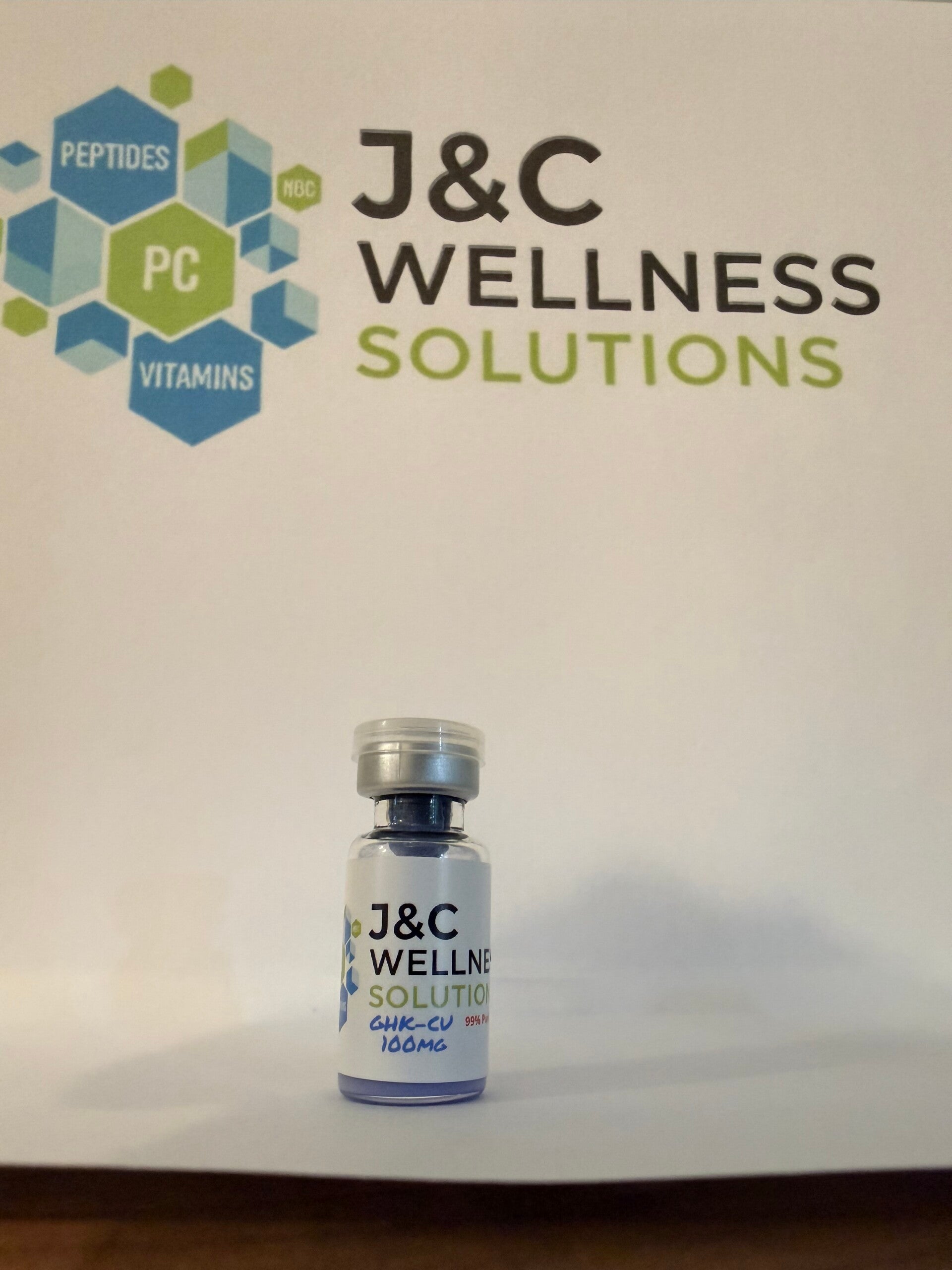
For research purposes only, this product is not intended for human consumption, diagnosis, or treatment. It has not been approved by the FDA or MHRA. Sales are limited to qualified researchers and institutions, and misuse could lead to account termination or legal consequences.
Comes with 5 x Needles and 5 x alcohol wipes
GHK-Cu is a naturally occurring copper-bound tripeptide (glycyl-L-histidyl-L-lysine) that promotes skin repair, wound healing, and tissue regeneration.
What GHK-Cu Is
GHK-Cu is a small peptide-metal complex consisting of the tripeptide glycine-histidine-lysine (GHK) bound to a copper ion (Cu²⁺) and is also known as Copper Tripeptide-1 in cosmetic ingredient lists. It occurs naturally in human plasma, saliva, urine, and wound fluid, with levels peaking in young adulthood (~200 ng/mL) and declining with age (~80 ng/mL by age 60),. The copper component is essential for its biological activity, as it supports collagen crosslinking, antioxidant enzyme function, and connective tissue formation.
Biological Functions
GHK-Cu acts as a signaling molecule that regulates tissue remodeling and repair. Its key functions include:
Stimulating collagen and elastin production, improving skin firmness and reducing fine lines.
Promoting wound healing and tissue regeneration by attracting immune cells and enhancing angiogenesis.
Exhibiting anti-inflammatory and antioxidant effects, reducing cytokines like IL-6 and modulating oxidative stress.
Supporting hair growth by enlarging hair follicles and extending the growth phase.
At the molecular level, GHK-Cu can modulate the expression of thousands of human genes, including those involved in DNA repair, mitochondrial function, and suppression of pathways associated with aging and cancer.
Applications
GHK-Cu is widely used in cosmetic and therapeutic contexts:
Topical formulations (serums, creams) target skin repair, anti-aging, and hair growth.
Injectable forms are used experimentally for systemic anti-aging, wound healing, and tissue regeneration, though long-term safety data for systemic use is limited.
Cosmetic concentrations are typically very low (up to 0.002%) and have decades of safety data.