Wolverine Stack
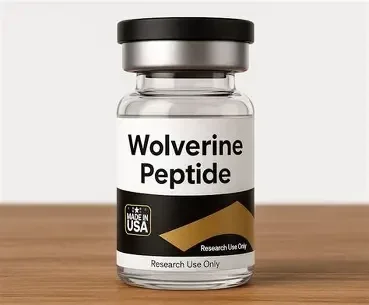
For research purposes only, this product is not intended for human consumption, diagnosis, or treatment. It has not been approved by the FDA or MHRA. Sales are limited to qualified researchers and institutions, and misuse could lead to account termination or legal consequences.
The Wolverine stack is a research-focused peptide combination of BPC-157 and TB-500 designed to synergistically support tissue repair and regeneration.
The Wolverine stack combines BPC-157 (Body Protection Compound-157) and TB-500 (Thymosin Beta-4) to enhance tissue healing through complementary mechanisms. Named after the Marvel character known for rapid regeneration, this stack is widely discussed in research and recovery communities for its potential to accelerate repair processes beyond what either peptide can achieve alone.
peptidedeck.com
Components and Mechanisms
BPC-157 is a 15-amino-acid peptide derived from human gastric juice. It primarily acts locally at injury sites, promoting:
Angiogenesis: Upregulates VEGF to form new blood vessels, improving nutrient and oxygen delivery.
Growth factor modulation: Enhances EGF, FGF, and other repair-related growth factors.
Nitric oxide pathway regulation: Supports vascular tone and inflammation control.
Tendon-to-bone healing: Accelerates repair at slow-healing junctions.
Gastroprotection: Demonstrates protective effects in gut tissue models.
TB-500 is a synthetic peptide derived from Thymosin Beta-4, functioning systemically to:
Promote cell migration and actin cytoskeleton remodeling.
Recruit stem-like progenitor cells to injury sites.
Support organized tissue regeneration and reduce scar formation.
Together, BPC-157 and TB-500 provide a division of labor: BPC-157 manages local repair, while TB-500 ensures systemic delivery of repair resources, creating a broader, potentially synergistic healing effect.
Dosing and Protocols
While neither peptide is FDA-approved, community-derived research protocols suggest:
Standard protocol: 500 mcg total daily (typically 250 mcg BPC-157 + 250 mcg TB-500) for 8 weeks, with injections near the injury site for localized effect.
Loading protocol: 750 mcg/day for 4 weeks, then 500 mcg/day for 8 weeks, used for chronic injuries.
Twice-daily acute protocol: 500 mcg AM + 500 mcg PM for 4 weeks, then standard dosing, often applied post-surgery or for acute injuries.
BPC-157 is generally administered more frequently for continuous local support, while TB-500 is used less frequently to provide systemic repair coverage. Healing effects may continue for 2–4 weeks after stopping the cycle